
- News
- Sports News
- Junior golf tees off to a bright future
Trending
This story is from April 15, 2011
Junior golf tees off to a bright future
With Indian golfers rising into prominence on the international circuit, there is no dearth of talent coming out of the country, says former golfer Rishi Narain.

NEW DELHI: India's victory in the 1983 cricket World Cup tipped the scales in favour of the sport for the next generation of budding sportsmen. Another victory in this year's edition at home has stamped cricket's authority as the No. 1 sport in the country by a distance. Where does that leave other sports in India? If the surge in professional golf in the country is anything to go by, sports as an industry has received a huge fillip.
With Indian golfers rising into prominence on the international circuit, there is no dearth of talent coming out of the country, says former golfer Rishi Narain. The 1982 Asian Games gold medalist is an authority on every aspect of the sport, and Rishi Narain Golf Management's foray into the junior circuit is a strong case in its favour.
For the first time in India, Toyota has come forward by sponsoring the complete calendar with the Toyota Etios Junior Golf Tour, in line with the company's long standing association with the sport worldwide.
That an 18-year-old Rashid Khan won a silver medal winner at last year's Asian Games in Guanzhou highlights the success of the sport in the country and showcase the impact junior golf has had over the past few years.
The former National Men's Champion as well as a junior champion himself, Narain is quick to point out that golf benefited where tennis failed to capitalize in the late nineties. "Besides the success of Leander Paes and Mahesh Bhupathi and now Sania Mirza and Somdev Devvarman, tennis hasn't produced high quality talent in the country. But golf has enjoyed that success over the last decade."
International junior tournaments like the Faldo Junior Series and the Thailand Junior competition are some of the prominent events where Indian players are invited to hone their skills, besides testing their competitiveness on a global level. The phenomenal rise of Gaganjeet Bhullar and Anirban Lahiri is testimony to an improved system of the sport in the country.
Bhullar and Lahiri were part of the silver medal winning Indian team at the 2006 Doha Asian Games and have risen from the junior circuit. Both have Asian Tour wins under their belt already, besides tasting a host of other professional success. Narain says it is the business-like running of the Indian Golf Union that has helped Indian golfers rise in such a short span of time. "It is a good thing that people sitting in the committee are businessmen - they have a less political way of looking at things."
Narain follows a similar train of thought as well. He says his stint in the United States in the 1980s stood him in good stead. "During the 6-7 years I spent in the US playing top level competitions I also learned how the game is developed. I learnt how the junior, amateur and professional circuits are run - by professionals."
Since returning to India in 1990, Narain explored the prospects of promoting the sport in the country. "It was in 1994 that a company started to invest in golf. The Honda-Siel PGA Championship and the Johnnie Walker Inter Club Championship in 1994-95 were the first professional competitions staged in the country." There indeed has been no looking back.
When asked if golf could drop its tag of being a lifestyle oriented sport in India and reach out to the masses, he says it only depends on the facilities provided and the access to it. "Delhi and Bangalore are perhaps the best when it comes to facilities and coaching programmes. The facilities existed in the country 10 years ago as well, but it wasn't until five years back that the ease of access began to increase with the help of coaching programmes."
While Delhi and Bangalore rule the roost, Narain says Bangalore's rise has been exponential. "There are more top ranked professional players coming out of the city than any other. Chandigarh has impressive coaching facilities and Pune and Kolkata are also not lagging far behind."
He reckons that the future is bright for professional golf in India. "You have already seen Gaganjeet and Anirban rise up the ranks, while Rahid Khan has been highly impressive in a matter of a few months. Trishul Chinappa, S Chikkarangappa and Tarundeep Chadha along with Rahul Ravi are making waves already while Vani Kapoor and Aditi Ashok have taken huge strides among the girls."
Narain has no doubt that golf will be difficult to upstage as the most sought after sport in the country after cricket, and it doesn't face any danger from other sports. "It's good to see football coming up in the country again, but even when it does, it will only eat into the market of cricket." For a nation of more than a billion, there is enough space to accommodate more than one game.
With Indian golfers rising into prominence on the international circuit, there is no dearth of talent coming out of the country, says former golfer Rishi Narain.
For the first time in India, Toyota has come forward by sponsoring the complete calendar with the Toyota Etios Junior Golf Tour, in line with the company's long standing association with the sport worldwide.
That an 18-year-old Rashid Khan won a silver medal winner at last year's Asian Games in Guanzhou highlights the success of the sport in the country and showcase the impact junior golf has had over the past few years.
Narain, known for his acumen in golf course development, offers an insight into the success of golf in India. "There is no question that golf is the No. 2 sport in the country," he says. "It is largely thanks to the amount of corporate sponsorships the sport enjoys and there is huge interest among youngsters thanks to the success of Indian golfers in the international golfers. That 18-20 different Indian players have won professional events in the last 15 years is inspiration enough."
The former National Men's Champion as well as a junior champion himself, Narain is quick to point out that golf benefited where tennis failed to capitalize in the late nineties. "Besides the success of Leander Paes and Mahesh Bhupathi and now Sania Mirza and Somdev Devvarman, tennis hasn't produced high quality talent in the country. But golf has enjoyed that success over the last decade."
International junior tournaments like the Faldo Junior Series and the Thailand Junior competition are some of the prominent events where Indian players are invited to hone their skills, besides testing their competitiveness on a global level. The phenomenal rise of Gaganjeet Bhullar and Anirban Lahiri is testimony to an improved system of the sport in the country.
Bhullar and Lahiri were part of the silver medal winning Indian team at the 2006 Doha Asian Games and have risen from the junior circuit. Both have Asian Tour wins under their belt already, besides tasting a host of other professional success. Narain says it is the business-like running of the Indian Golf Union that has helped Indian golfers rise in such a short span of time. "It is a good thing that people sitting in the committee are businessmen - they have a less political way of looking at things."
Narain follows a similar train of thought as well. He says his stint in the United States in the 1980s stood him in good stead. "During the 6-7 years I spent in the US playing top level competitions I also learned how the game is developed. I learnt how the junior, amateur and professional circuits are run - by professionals."
Since returning to India in 1990, Narain explored the prospects of promoting the sport in the country. "It was in 1994 that a company started to invest in golf. The Honda-Siel PGA Championship and the Johnnie Walker Inter Club Championship in 1994-95 were the first professional competitions staged in the country." There indeed has been no looking back.
When asked if golf could drop its tag of being a lifestyle oriented sport in India and reach out to the masses, he says it only depends on the facilities provided and the access to it. "Delhi and Bangalore are perhaps the best when it comes to facilities and coaching programmes. The facilities existed in the country 10 years ago as well, but it wasn't until five years back that the ease of access began to increase with the help of coaching programmes."
While Delhi and Bangalore rule the roost, Narain says Bangalore's rise has been exponential. "There are more top ranked professional players coming out of the city than any other. Chandigarh has impressive coaching facilities and Pune and Kolkata are also not lagging far behind."
He reckons that the future is bright for professional golf in India. "You have already seen Gaganjeet and Anirban rise up the ranks, while Rahid Khan has been highly impressive in a matter of a few months. Trishul Chinappa, S Chikkarangappa and Tarundeep Chadha along with Rahul Ravi are making waves already while Vani Kapoor and Aditi Ashok have taken huge strides among the girls."
Narain has no doubt that golf will be difficult to upstage as the most sought after sport in the country after cricket, and it doesn't face any danger from other sports. "It's good to see football coming up in the country again, but even when it does, it will only eat into the market of cricket." For a nation of more than a billion, there is enough space to accommodate more than one game.
End of Article
FOLLOW US ON SOCIAL MEDIA





Top Sports News
TOP TRENDING
Trending Stories
In Sports
Entire Website
- 1st Test Live: Bumrah, Akash Deep, Siraj leave Bangladesh in tatters
- Shaqkere Parris hits jaw-dropping 124m six in CPL clash - Watch
- Angry Rishabh Pant to Litton Das: 'Mere ko kyu maar rahe ho?'- Watch
- India vs Bangladesh: Who is Hasan Mahmud who dismissed Rohit Sharma, Shubman Gill and Virat Kohli cheaply in first Test
- Dulip Samaraweera hit with 20-year ban by Australia due to 'inappropriate behaviour'
- Sourav Ganguly takes legal action against YouTuber
- Best style is the style that wins: Gautam Gambhir
- Chess Olympiad: India's men and women teams continue winning run to stay on top
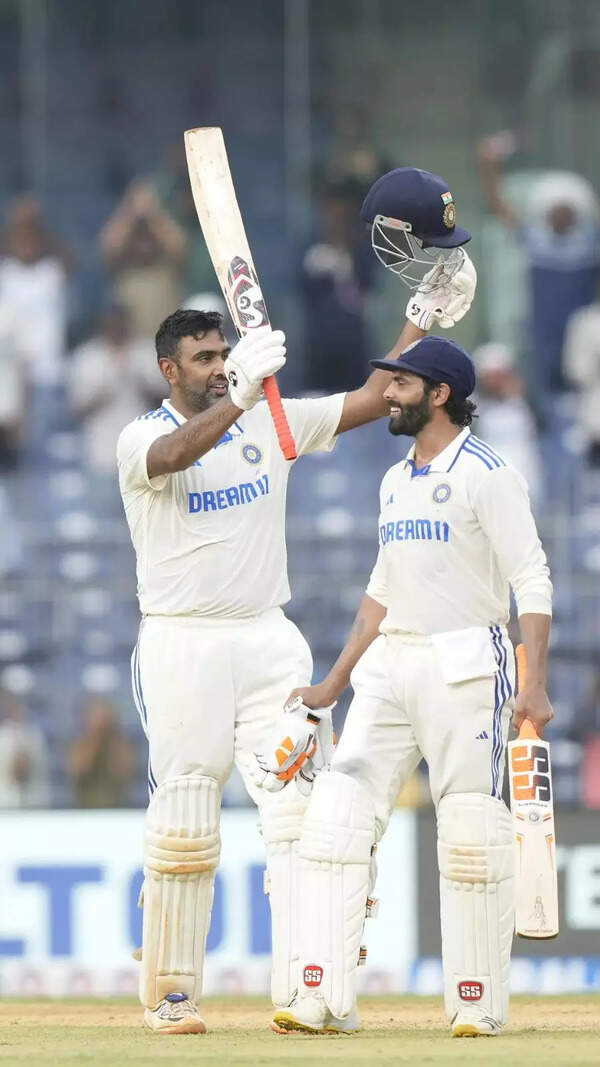
- 1st Test: Centurion Ashwin, Jadeja take India to 339/6 at stumps on Day 1
- What MS Dhoni said to Yuvraj Singh after he hit Stuart Broad for 6 sixes in 2007 T20 World Cup
- 'Rs 500cr revenue annually': Tirupati's sacred sweet takes sour turn amid prashad row
- SC’s YouTube channel hacked, streams videos promoting cryptocurrency
- How Tupperware, trusted by moms and the Queen, went bankrupt
- 'Showing as if there is hostile environment in whole Bengal,' SC tells CBI
- 1st Test Live: Bumrah, Akash Deep, Siraj leave Bangladesh in tatters
- 'Stripped, tied my legs': Army man's fiancee shares police station ordeal
- Explainer: Exploding pagers – How Israel built modern Trojan horse
- Pics: iPhone 16 series goes on sale in India, lines seen outside Apple Stores
- Anna’s death: EY Chairman says, 'I truly regret… '
- Admission of India's greatness from Pakistan: 'Bharat ek great team'

Popular Categories
Hot on the Web
Top Trends
Trending Topics
Stree 2 CollectionSalim KhanAbdu RozikHema CommitteeJayamSana Khan HusbandTirupati Laddoo ControversyGOAT CollectionVaazha OTT ReviewKozhipannai Chelladurai ReviewCheetahsKangana RanautAditi Rao HydariDalljiet KaurHoliday DestinationVikas SethiBest Selling Earbuds Under 1000Apple iPhone 16 ProVirat KohliWordle Answer
Living and entertainment
Latest News
SoftBank’s latest investment signals Masa’s brand-new India strategyWhat happens if we see God in DreamsCon artist held for posing as customs inspector in SuratAllu Aravind on Bollywood filmmakers having limited perspectives in their films: 'They are locked between Bandra and Juhu'Mafia ran govt in Samajwadi Party rule while 'babua' slept: Yogi AdityanathAnil Ambani's Reliance Infrastructure to raise over Rs 6,000 croreHow Israel built a modern-day Trojan Horse: Exploding pagersPM Modi must take to task those abusing Rahul, says CongressGarena Free Fire MAX redeem codes for September 20: Win free in-game rewards dailyAnna Sebastian Perayil’s death: EY Chairman Rajiv Memani says, ‘I truly regret…’The 3 Strongest Zodiac Signs: Powerhouses of the Zodiac WheelPrincipal flogs 8-year-old over incorrect spelling in Rajasthan's AlwarJumbo rate cut by Fed good for Indian mkt, eco: ExpertsActor says producer molested & abused herJr NTR drops an update on his next with Prashanth Neel; deets insideThe ‘default chat settings’ that may hurt Google in antitrust caseDetroit Lions Head Coach Dan Campbell Puts Home Up For Sale For One Particular ReasonThese 5 homemade chutneys can fix common health issues
Copyright © 2024 Bennett, Coleman & Co. Ltd. All rights reserved. For reprint rights: Times Syndication Service